
This lemon pepper salmon is one of those recipes I come back to again and again. It’s simple, fresh, and doesn’t need much to taste really good. Just lemon, olive oil, salt, and pepper—things you probably already have.
I like to marinate the salmon first so it really soaks in that lemon flavor, then bake it in foil so it stays soft and juicy. The quick broil at the end gives it just a little color on top without drying it out.
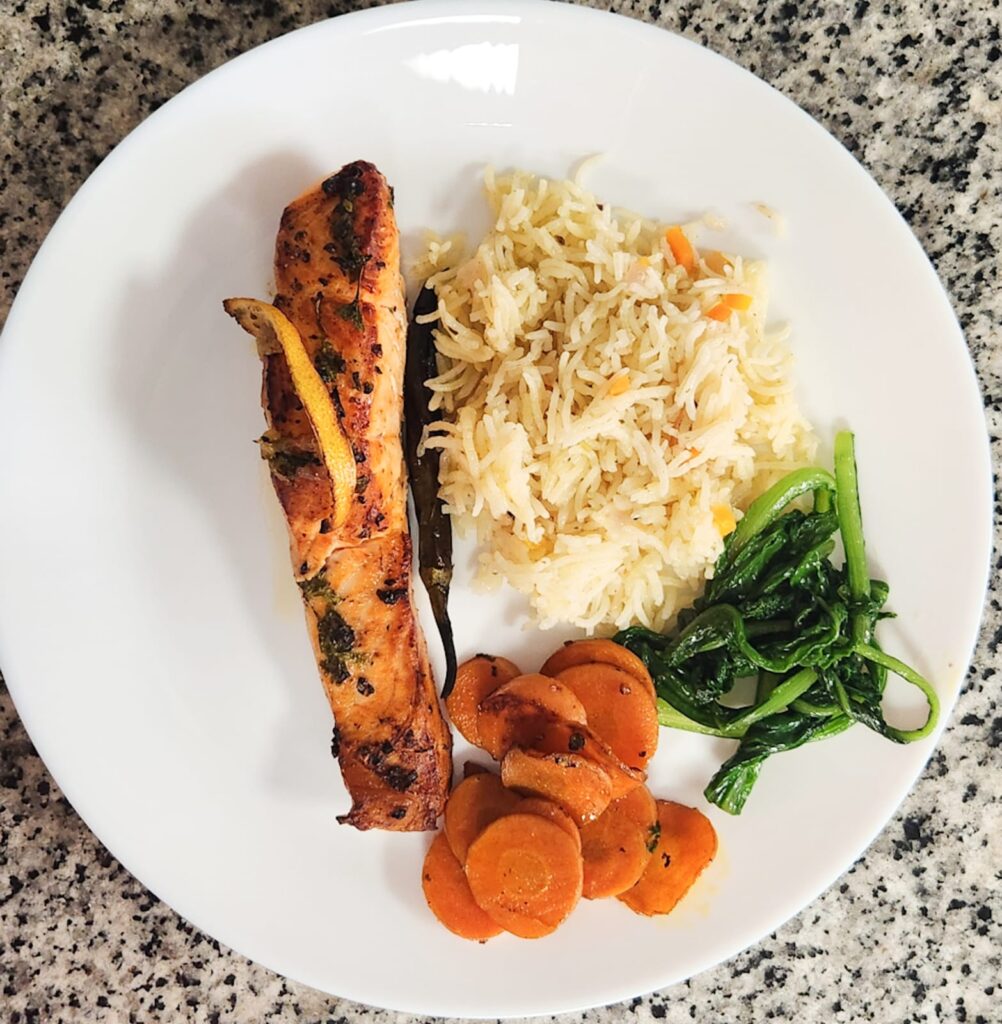
It’s easy enough for a weeknight but still feels like something a little special. Serve it with rice, veggies, or a simple salad and dinner is done.
Ingredients
Serves 4 to 5
- 2 lb salmon side, boneless, skin on or skin off
- 2 medium lemons, divided
- 2 tablespoons extra virgin olive oil
- 1 teaspoon kosher salt
- 1/2 teaspoon black pepper, plus more to taste
- Fresh flat-leaf parsley, chopped, for finishing
- Extra lemon wedges for serving
How to Make It
Step 1: Marinate the salmon (10 to 15 minutes)
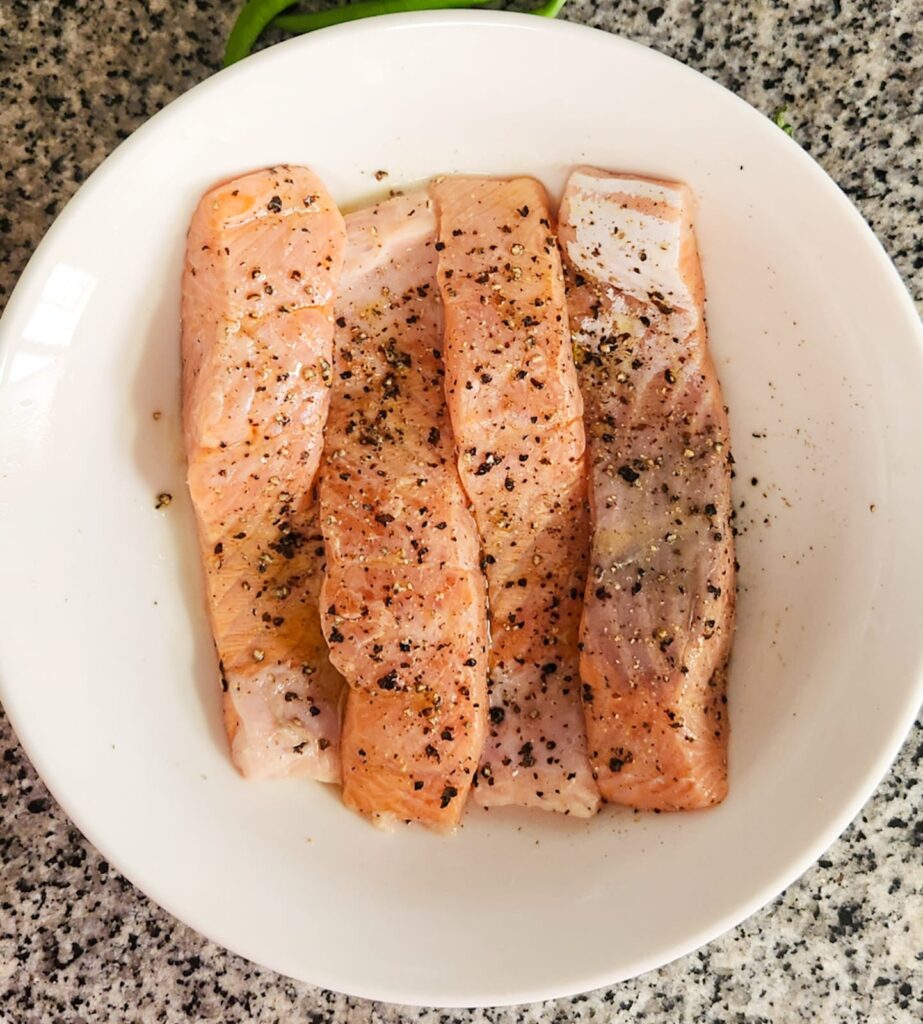
Place the salmon in a large bowl or directly on the foil-lined baking sheet. Drizzle with olive oil and squeeze the juice of one lemon over the top.
Sprinkle with salt and black pepper. Gently press the seasoning into the fish with your hands or a spoon to coat evenly.
Let it sit for 10 to 15 minutes at room temperature.
Don’t marinate longer than 30 minutes. The citric acid in the lemon juice starts to break down the fish proteins with extended contact, which changes the texture and can make the surface look slightly cooked even before it hits the oven.
Step 2: Prepare the baking sheet
Preheat your oven to 375°F (190°C). Line a baking sheet with a sheet of aluminum foil large enough to fold over and seal around the salmon with some room to spare — you want the foil to be roughly twice the length of your fish.
If you prefer no direct foil contact with the fish, lay a piece of parchment paper on top of the foil before placing the salmon. Give it a light spray of cooking oil.
Step 3: Build the lemon layer
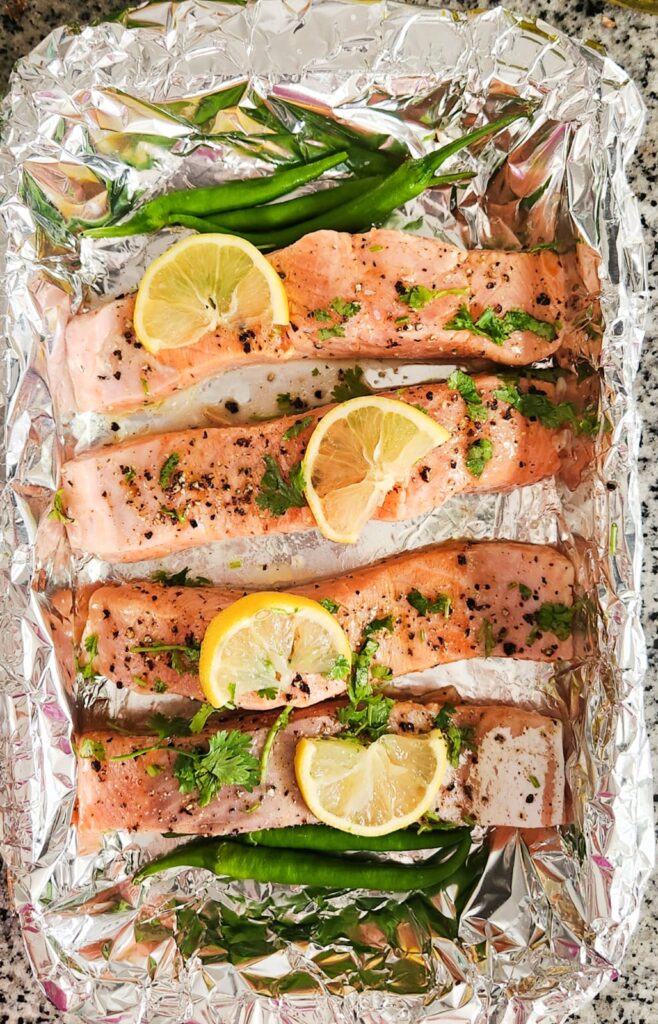
Slice the second lemon into rounds, about 1/4 inch thick. Arrange half the lemon slices in a single layer on the foil where the salmon will sit. This creates a fragrant bed that lifts the fish slightly and perfumes the bottom as it steams.
Place the marinated salmon on top of the lemon slices.
Arrange the remaining lemon slices over the top of the fish. If you want extra lemon flavor — and I always do — zest the second lemon directly over the salmon before sealing, then squeeze any remaining juice over the top.
Step 4: Seal the foil packet
Bring the long edges of the foil up and over the salmon. Fold them together several times to create a tight seal along the top. Fold and crimp the short ends closed as well.
The packet should be sealed but not tight against the fish — you want a little air space inside so the steam can circulate around the salmon rather than just pressing against it.
A well-sealed packet is what makes this method work. If the foil has holes or loose seams, the steam escapes and you lose the moisture-trapping effect.
Step 5: Bake
Place the foil packet on the baking sheet. Bake at 375°F for 18 to 21 minutes.
The timing depends on the thickness of your salmon. As a rough guide: 18 minutes for a thinner piece (under 1 inch at the thickest), 20 to 21 minutes for a thicker side (1 to 1.5 inches).
The salmon is ready to move to the broiler when it’s almost — but not quite — cooked through. It should still look very slightly translucent in the very center. It will finish under the broiler.
Step 6: Broil for the golden top
Carefully open the foil — peel it back from the edges, not from the center, and keep your face away from the initial release of hot steam. It’s hot and it’s real.
Fold the foil down and away from the salmon so the top surface is fully exposed. Switch your oven to broil on high. Return the baking sheet to the oven on the top rack, about 4 to 6 inches from the broiler element.
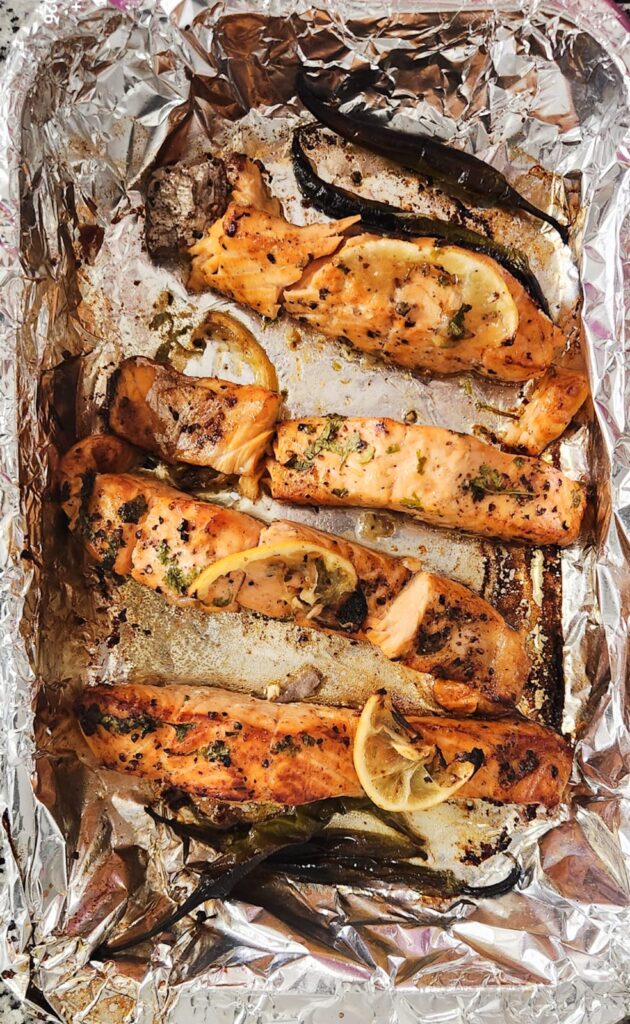
Broil for 2 to 3 minutes, watching closely the whole time. You’re looking for the top to turn lightly golden and for a few edges to start to caramelize slightly.
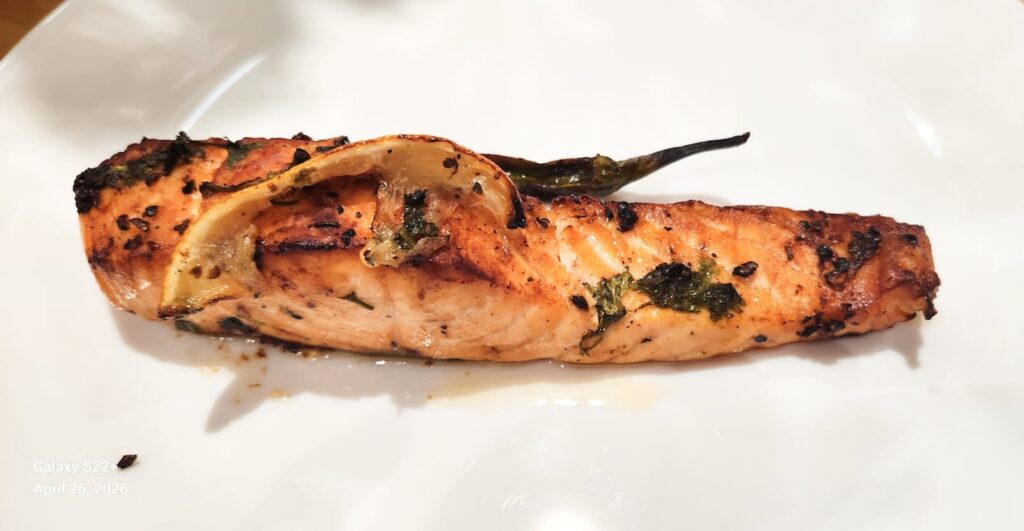
The lemon slices on top will blister and char at the edges, which looks beautiful and smells even better.
Pull it out the moment it looks done. The broiler works fast and the difference between lightly golden and overdone is about one minute of inattention.
Step 7: Rest, finish, and serve
Let the salmon rest on the baking sheet for 2 to 3 minutes out of the oven. This rest allows the juices to redistribute and the carryover heat to finish any remaining translucent spots without drying the fish.
Test for doneness: slide a fork into the thickest part of the salmon and twist gently. It should flake apart in clean, separate layers with no resistance. The color should be opaque all the way through — no translucent pink remaining.
Sprinkle generously with fresh chopped parsley. Serve directly from the foil with extra lemon wedges alongside.
The juices pooled in the foil packet are full of flavor — spoon them over the fish before serving.
Tips for Perfect Baked Salmon Every Time
Pat the salmon dry before marinating.
Excess surface moisture dilutes the marinade and prevents the olive oil from coating the fish properly. A quick pat with paper towels takes ten seconds and makes a difference.
Room temperature fish cooks more evenly.
Take the salmon out of the fridge while the oven preheats — about 15 minutes is enough. Cold fish straight from the fridge has a longer journey from center to edge temperature-wise, which can leave you with an overcooked exterior and an undercooked center.
Don’t skip the broil step.
The foil packet produces salmon that is perfectly moist but slightly pale on top. The two to three minutes under the broiler gives you the golden, slightly crispy surface that makes salmon look and taste like it came from a restaurant rather than your home oven. It’s the step that finishes the dish.
Watch the broiler.
The difference between golden and burnt under a broiler is about 60 seconds. Don’t walk away, don’t check your phone. Stand at the oven and watch it.
Save the foil juices.
The liquid that pools in the bottom of the foil packet during baking is essentially a light, lemony fish jus. Spoon it over the plated salmon or over rice or vegetables served alongside. It’s too good to leave in the foil.
Variations Worth Trying
Garlic Lemon Salmon
Add 3 to 4 cloves of garlic, thinly sliced, scattered over the salmon before sealing the foil. The garlic softens, and roasted garlic flavor pairs beautifully with the lemon.
Herb Crusted Lemon Salmon
Before sealing the foil, press a mixture of finely chopped fresh herbs over the top of the salmon — dill, parsley, chives, and a little thyme all work well. During the broil step, the herbs crisp slightly and create a beautiful green crust.
Lemon Butter Salmon
Add 2 tablespoons of cold butter, cut into small cubes, scattered over the salmon before sealing. The butter melts during baking and combines with the lemon juice to create a silky, rich sauce at the bottom of the packet. This version is more indulgent and incredibly good spooned over the fish.
Mediterranean Lemon Salmon
Add sliced cherry tomatoes, kalamata olives, and a sprinkle of dried oregano over the salmon before sealing. Finish with crumbled feta after broiling. The tomatoes and olives blister and soften in the steam, creating a simple sauce that gives the whole dish a Mediterranean character.
Spicy Lemon Salmon
Add 1/2 teaspoon of red chili flakes and a light drizzle of chili oil over the salmon before sealing. The heat balances the brightness of the lemon and gives the dish a slightly different energy — particularly good served over rice.
What to Serve With Lemon Salmon
The flavors here are clean and bright, which means this salmon pairs well with a wide range of sides.
For a light dinner:
- Simple green salad with a lemon vinaigrette
- Steamed asparagus or green beans with olive oil
- Sliced cucumber and tomato with feta and fresh herbs
For something more substantial:
- Roasted baby potatoes with garlic and rosemary
- Creamy cauliflower mash or mashed sweet potato
- Brown rice or quinoa with herbs and lemon zest
- Orzo tossed with olive oil, lemon, and parmesan
For a crowd:
- Serve the whole salmon side on a large platter with lemon wedges, capers, and fresh dill — it’s a stunning presentation that feeds a group with very little effort
- Add a bowl of tzatziki alongside for dipping
- Warm crusty bread to soak up the juices
How to Store and Reheat Leftovers
Storing:
Once cooled, transfer leftover salmon to an airtight container. Keep in the fridge for up to 3 days. Store any cooking juices separately to use when reheating.
Reheating:
The best way to reheat salmon without drying it out is low and slow in the oven — wrap the leftover salmon in fresh foil with a small splash of water or lemon juice, and warm at 300°F for about 10 minutes. Microwaving works in a pinch but tends to dry the fish out and can make the whole kitchen smell intensely of fish.
Using leftover salmon:
Cold leftover salmon is excellent flaked into a salad, mixed into pasta with a light cream sauce, folded into scrambled eggs, or served on toast with cream cheese and capers in the style of a smoked salmon breakfast.

Lemon Pepper Salmon
Ingredients
- 2 lb salmon side boneless, skin on or off
- 2 medium lemons divided
- 2 tablespoons extra virgin olive oil
- 1 teaspoon kosher salt
- 1/2 teaspoon black pepper
- Fresh flat-leaf parsley chopped, to finish
- Extra lemon wedges for serving
Instructions
- Place salmon in a bowl or on the prepared foil. Drizzle with olive oil and squeeze juice of one lemon over the top. Season with salt and pepper. Let sit 10 to 15 minutes.
- Preheat oven to 375°F (190°C). Line a baking sheet with a large piece of aluminum foil. Place parchment on top if desired. Lightly spray with oil.
- Slice the second lemon. Arrange half the slices on the foil. Place salmon on top. Arrange remaining lemon slices over the fish. Zest and squeeze any remaining lemon over the top if desired.
- Fold foil up and over the salmon, sealing the edges tightly but leaving a little air space inside.
- Bake for 18 to 21 minutes until almost cooked through.
- Carefully open the foil away from your face — watch for hot steam. Fold foil back to expose the salmon fully.
- Switch oven to broil. Broil on high for 2 to 3 minutes, watching closely, until the top is lightly golden.
- Remove from oven. Rest 2 to 3 minutes. The salmon should flake easily with a fork.
- Sprinkle with fresh parsley and serve with extra lemon wedges. Spoon the cooking juices from the foil over the fish before serving.
Notes
- Thickness determines timing — check at 18 minutes and add time as needed.
- Don’t skip the broil step — it gives the salmon color and slightly caramelized edges.
- Watch the broiler closely. Two minutes is often enough.
- Leftover salmon keeps in the fridge for up to 3 days. Reheat in foil at 300°F rather than microwaving.
- Add sliced garlic or cold butter cubes over the salmon before sealing for a richer version.